MOON
Overview
LUNARWATER
Principal Investigator, Dr. Guillaume Gronoff got his PhD from the Universite Joseph Fourier in Grenoble (France). His specialty is the impact of energetic particles on planetary atmospheres, which led him to study the impact of cosmic rays and other particles on Titan, Mars, Venus, etc.
After a postdoctoral fellowship at NASA Langley Research Center, he joined SSAI in 2012. He is currently the PI of the NASA Langley Mobile Ozone Lidar which studies the pollution in the Earth's atmosphere. He also works on the development of the Nowcast of Aerospace Irradiation System, which allows to assess the irradiation of astronauts in the ISS and has capabilities to study the irradiation for a travel to the Moon. He applies his competencies in particle impacts to the exosphere of the Moon, with the LUNARWATER project which is a project for a lunar mission embedding, HOLMS, a spectrometer for the study of the lunar water (developed in collaboration with JPL).
The project is partially supported by SSAI’s internal research and development funding, with the objective to send an instrument, the Heterodyne OH Lunar Miniaturized Spectrometer, or HOLMS, to the surface of the Moon, as part of the NASA’s funded commercial lunar payload services (CLPS) initiative. The purpose is to measure and understand the water cycle in the Moon’s thin atmosphere. Water is known to be present at the poles in form of ice, but the volatile amount of water needs to be quantified. The presence of water on the Moon will be crucial to the Artemis mission whose purpose is to establish a permanently inhabited base on the Moon. In addition to the use of water by astronauts, studying the lunar water could better help our understanding of the solar system.
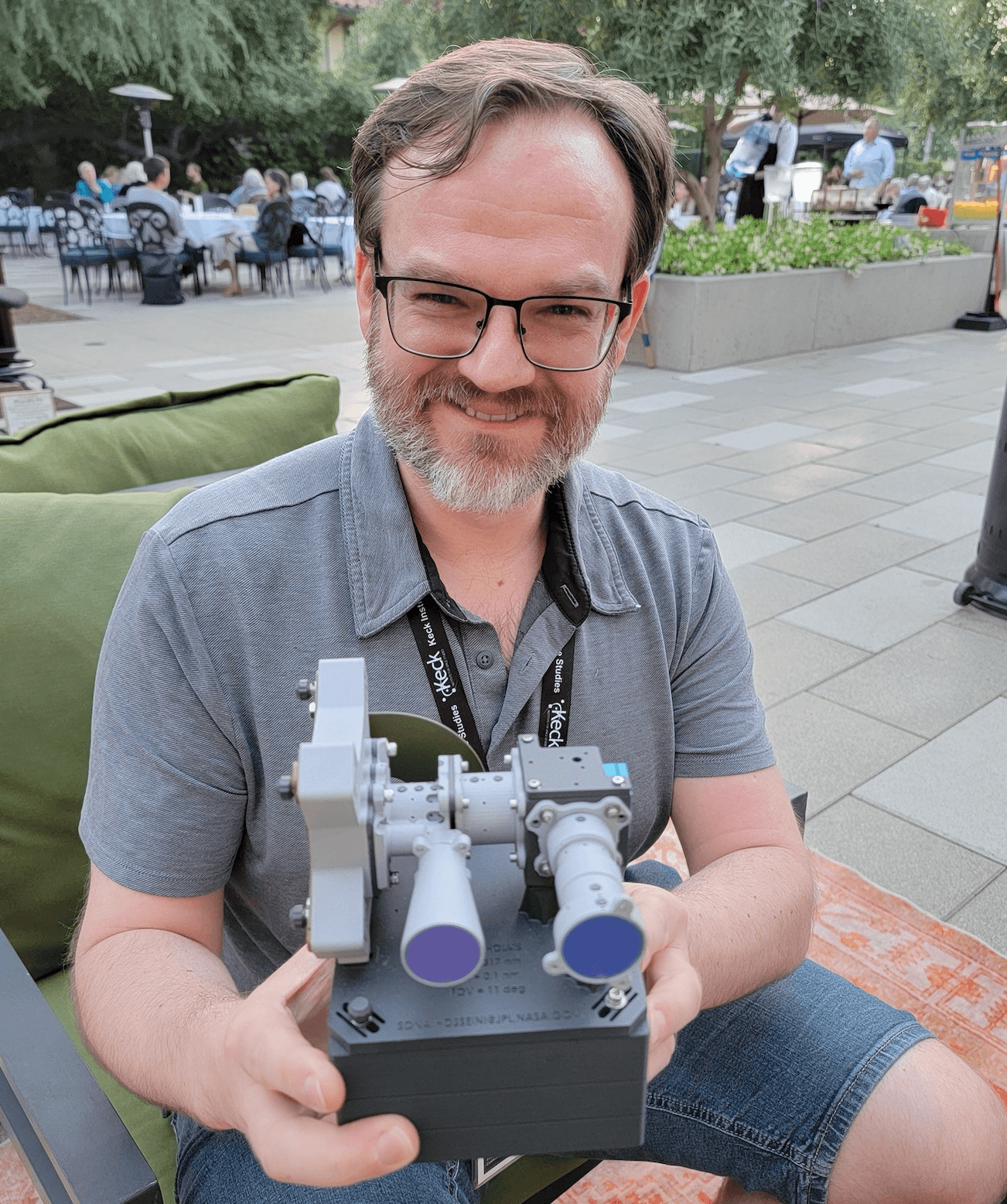
(Dr. Guillaume Gronoff with a 1:1 scale model of his instrument)
CHECK OUT GUILLAUME’S SPOTLIGHT
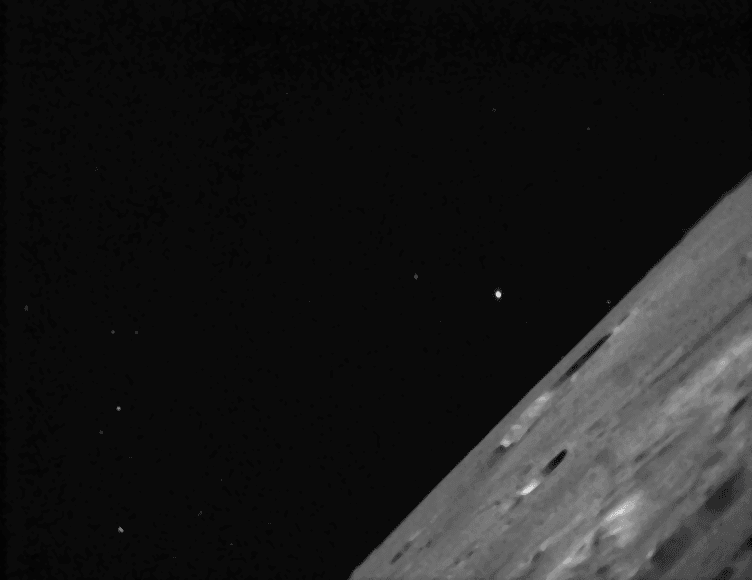
Image taken by LADEE (Courtesy: NASA)
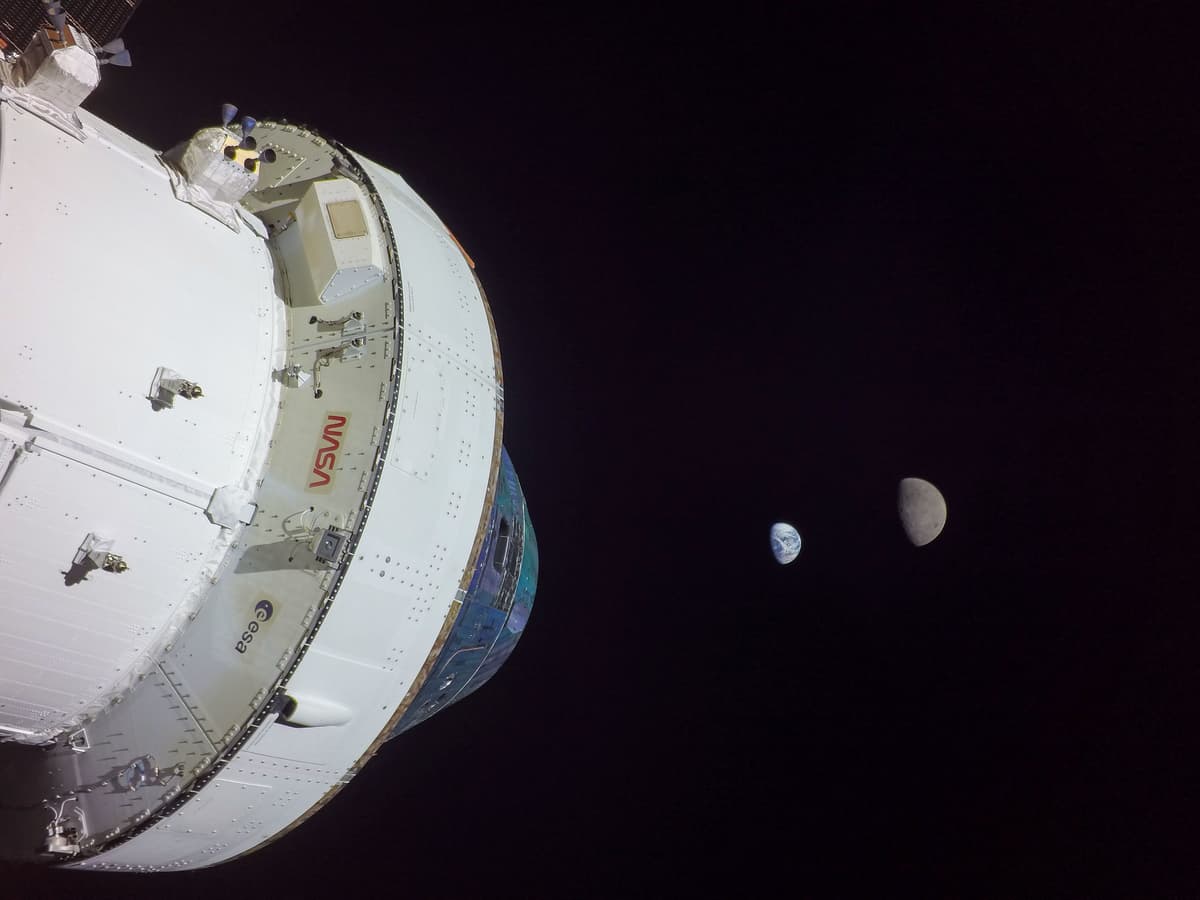
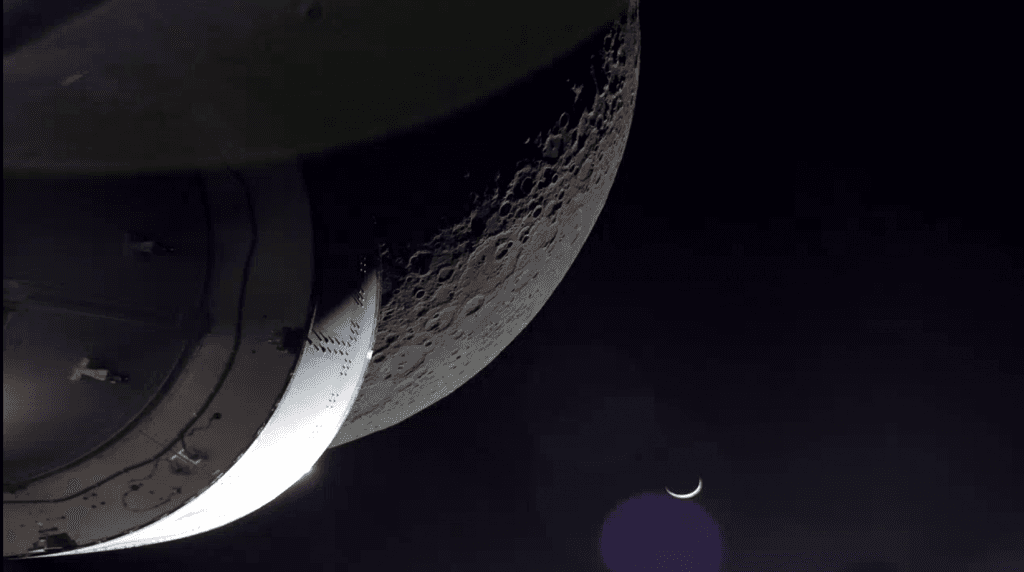
Image taken by Orion (Courtesy: NASA)
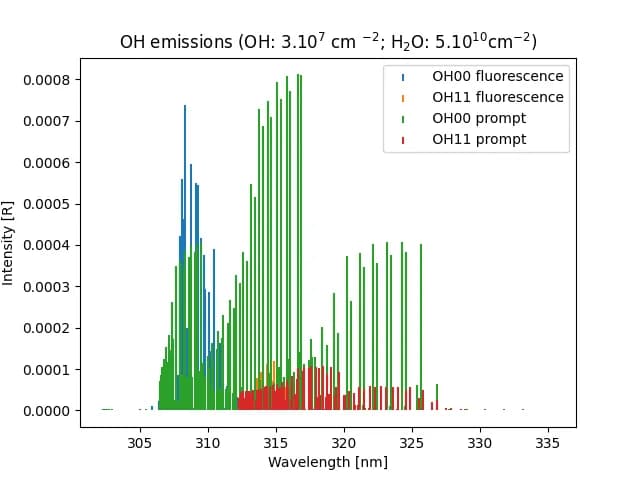
Simulation of OH/H2O emissions